How can we help?

Get in Touch
Please get in touch using the form below.

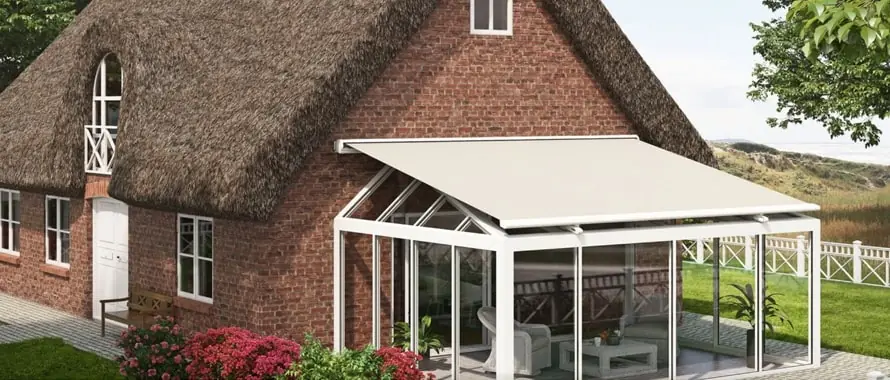
How to Keep a Conservatory Cool in Summer: Practical Shading Solutions
Hue House Outdoor Shading
https://huehouseawnings.co.uk/wp-content/themes/hue-house-awnings/img/logos/supersonic-playground-logo.png
300
80
Hue House Outdoor Shading
by Joe Bichard | In: Conservatory Awnings |
A conservatory can become uncomfortable surprisingly quickly when strong sunlight reaches a large area of glass. If you are wondering how to keep a conservatory cool without making the room dark or losing the view, the best approach is to control solar heat before it builds up and then give warm air a way to escape.
Shading is usually one of the most useful parts of that plan. Combined with sensible ventilation, internal blinds and air movement, it can help make a conservatory much easier to use for dining, working, reading or relaxing during warmer weather.
Quick answer: how do you keep a conservatory cool in summer?
Start by reducing the amount of strong sunlight reaching the glass, particularly across the roof. External shading can intercept direct sun before it passes through the glazing, while ventilation, internal blinds and fans can help manage heat and comfort inside the room.
In This Guide
Why Conservatories Get So Hot
Conservatories are designed to bring plenty of daylight into the home, but large areas of glass can also allow significant solar heat into the room.
Once the floor, furniture and other surfaces have warmed up, they release heat back into the space. If windows and doors are closed, this warmth can remain trapped and the room may continue getting hotter.
Orientation makes a difference too. South-facing conservatories can receive strong sunlight for long periods, while west-facing rooms often experience particularly intense afternoon sun. The roof design, glazing, ventilation and surrounding shade all influence how quickly temperatures rise.
How to Keep a Conservatory Cool in Summer
There is rarely one single fix. The most comfortable conservatories usually combine ways of controlling sunlight with ways of releasing or circulating warm air.
1
Shade the Glass
Reduce direct solar heat before it has time to build up inside the room.
2
Improve Ventilation
Give accumulated warm air somewhere to escape through vents, windows or doors.
3
Control Glare
Use internal blinds where privacy, low sun or screen glare are part of the problem.
4
Keep Air Moving
Fans can improve how comfortable the room feels even though they do not lower the actual air temperature.
Use External Shading to Control Solar Heat
External shading is one of the most direct ways to tackle heat build-up because it can reduce the amount of intense sunlight reaching the glazing in the first place.
That is different from relying solely on an internal blind after sunlight has already passed through the glass. Hue House’s made-to-measure conservatory awnings include systems designed specifically for glazed roofs, conservatories and sunrooms.
Depending on the structure, shading can be fitted above the roof or beneath the glazing. Roof shape, fixing points, glass area and the way you use the room all affect which option is most suitable.
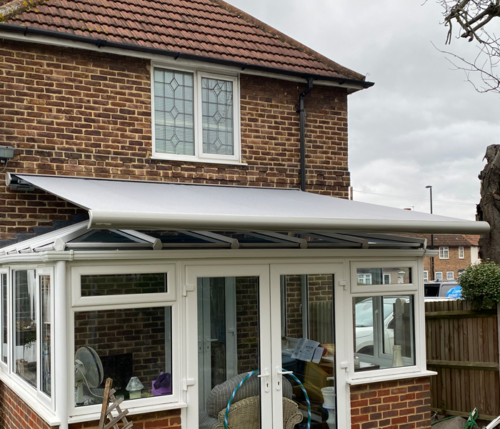
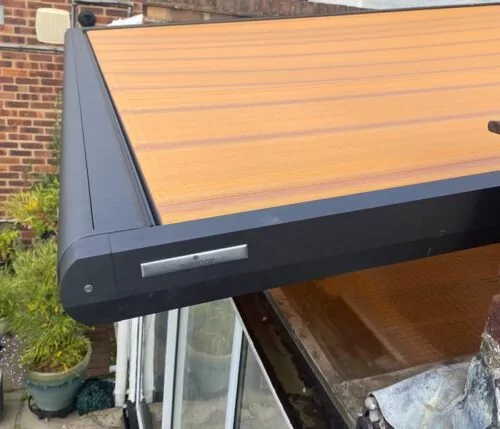

Hue House has completed a range of conservatory and glazed-roof installations. Visit Our Work to see more examples and different system configurations.
Roof-Mounted or Under-Glass Shading?
Both approaches can make a conservatory more comfortable, but they control sunlight in different ways.
External
Roof-Mounted Awnings
An awning positioned above the conservatory roof shades the glazing before direct sunlight reaches it. This can be particularly useful where the roof receives long periods of strong sun.
Motorised operation can make larger or hard-to-reach systems easier to control as conditions change.
Internal
Under-Glass Awnings
Under-glass shading sits beneath the roof glazing. It can soften strong light, reduce glare and create a more finished appearance inside the conservatory.
Because sunlight has already reached the glass, its role in controlling heat is different from an external roof-mounted system.
Which type is right for your conservatory?
Start with where the strongest sunlight enters the room. If the roof is the main source of heat, overhead shading is likely to be the priority. Hue House can assess the glass area and fixing options when you get in touch about conservatory shading.
A real installation example
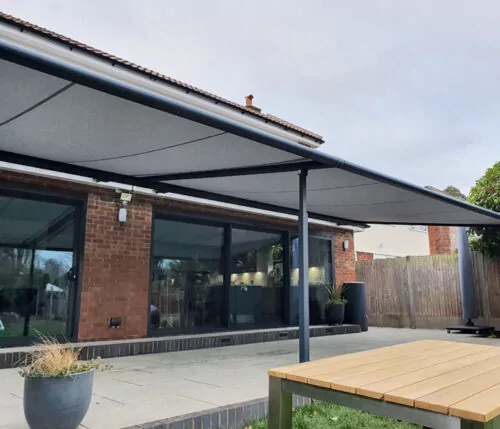
One system Hue House has used above conservatories is the Weinor Semina Life, a retractable cassette awning that can be motorised for easier adjustment.
Manage Heat and Airflow Inside the Conservatory
Once direct sunlight is under better control, the next step is to manage the warm air already inside the room.
Use Ventilation at the Right Time
Roof vents, high-level windows and doors can give accumulated warm air a route out. Ventilation is most useful when the air outside is cooler than the conservatory.
During the hottest part of a very warm day, opening every window may simply bring hotter outdoor air inside.
Reduce Heat From Adjoining Rooms
Kitchens, appliances and warm air from the main house can add to the problem. If the conservatory is already warmer than the rest of the property, closing connecting doors for part of the day may help.
Once temperatures fall later in the day, opening the spaces back up can help stored heat disperse.
Use Fans to Improve Comfort
Fans do not reduce the actual room temperature, but moving air can make the space feel more comfortable. A quiet pedestal or floor fan is often the simplest option.
Positioning a fan near an open door or window can also help encourage trapped warm air towards an exit.
A useful summer routine
Keep direct sunlight under control during the hottest part of the day. As outdoor temperatures begin to fall later in the afternoon or evening, increase ventilation to help release the heat stored inside.
Use Internal Blinds for Glare and Privacy
Internal blinds can be useful alongside roof shading, particularly where low-angle sunlight, privacy or glare on televisions and computer screens are the main concerns.
They are also easy to adjust depending on how the conservatory is being used. For heat control, think of internal blinds as part of the overall solution rather than the only measure.
If strong sunlight is also entering through large doors or windows adjoining the conservatory, a patio awning may provide additional shade to both the glazing and outdoor seating area.
Choose Shading Around How You Use the Room
The best answer to how to keep a conservatory cool is not necessarily the option that blocks the greatest amount of light.
A home office may need particularly good glare control around screens, while a dining or living space may benefit from adjustable shade that keeps the conservatory feeling bright and open.
The roof receives most of the sun
Prioritise overhead shading that controls sunlight across the main glazed area.
Low afternoon sun causes discomfort
Side shading or suitable internal blinds may be an important part of the solution.
Screens are difficult to see
Focus on glare control as well as temperature, particularly around work or television areas.
The room feels stuffy rather than sunny
Ventilation and improved air movement may be just as important as adding further shade.
Start with the source of the problem
If most of the strong sunlight comes through the roof, begin with roof shading. If low-angle light is the issue, side shading or internal blinds may matter more. If the conservatory only becomes uncomfortable once it is closed up, airflow may be the bigger weakness.
Frequently Asked Questions About Keeping a Conservatory Cool
What is the best way to keep a conservatory cool?
Start by reducing direct sunlight across the main glazed areas, particularly the roof, then combine this with useful ventilation and air movement. The best approach depends on the conservatory’s orientation, glazing and how you use the room.
Do conservatory blinds help keep the room cool?
Yes. External shading can reduce the amount of intense sunlight reaching the glazing, while internal blinds can provide additional glare control, privacy and adjustable shade inside the room.
Should you keep conservatory windows open on a hot day?
Ventilation is useful when it allows warmer indoor air to escape. If the outside air is significantly hotter, opening every window may bring additional heat inside. Increasing ventilation when outdoor temperatures begin to fall can work well.
Will a fan cool down a conservatory?
A fan does not lower the actual air temperature, but moving air can make the room feel more comfortable. It can also help encourage warm air towards an open door or window.
Can you keep a conservatory cool without air conditioning?
Often, yes. Adjustable shading, sensible ventilation, glare control and fans can all improve comfort without relying on air conditioning. The right combination depends on how much direct sun the conservatory receives.
Can a conservatory be cooled without making it dark?
Yes. Adjustable awnings and carefully chosen blinds allow you to soften harsh sunlight while retaining useful daylight. The aim is to manage the intensity of the sun rather than block natural light completely.
Looking after an existing awning?
If your conservatory already has external fabric shading, our guide to how to clean awning fabric covers routine cleaning, stains, mould and drying.
Make Your Conservatory More Comfortable This Summer
If your conservatory becomes too hot or bright during sunny weather, Hue House can assess the roof, glazing, exposure and fixing options and recommend a made-to-measure shading system for your home.
Related articles
27th April 2026
 https://huehouseawnings.co.uk/wp-content/uploads/2024/03/markilux1710Viewfrombelowtheyellowawningcoverandcrossedfoldingarmsforalargerdrawthanwidth-500x313.jpg
Markilux 1710 Awning
https://huehouseawnings.co.uk/wp-content/uploads/2024/03/markilux1710Viewfrombelowtheyellowawningcoverandcrossedfoldingarmsforalargerdrawthanwidth-500x313.jpg
Markilux 1710 Awning
How to Clean Awning Fabric: Step-by-Step Guide
Learn how to clean awning fabric safely with our practical step-by-step guide, including advice on stains, mould, drying and ongoing awning care.

Request a Brochure
Choose a digital e-brochure, or request a printed version straight to your door.